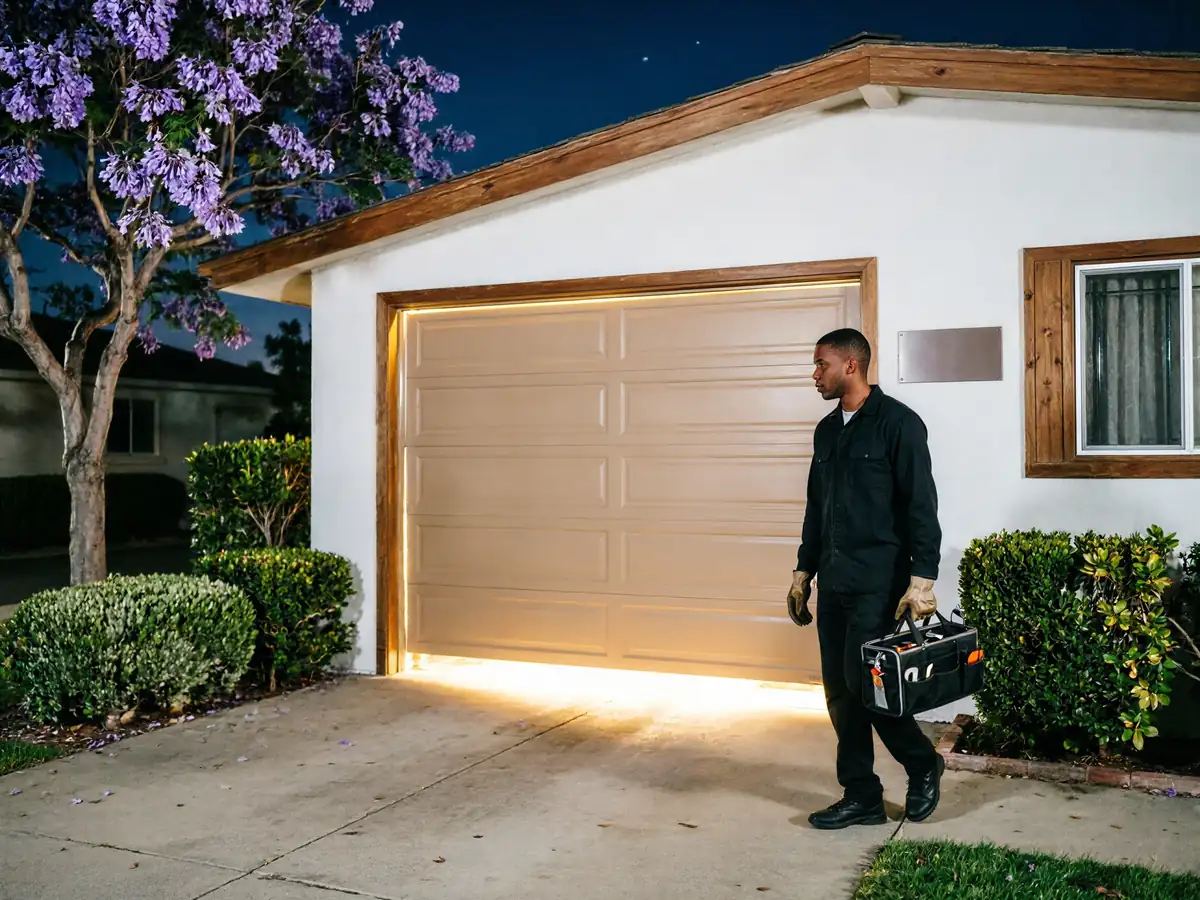
Malibu homes built mostly between 1967 and 1997 carry original hardware that wasn't made for coastal air. Here's how to tell if your door is still worth repairing.
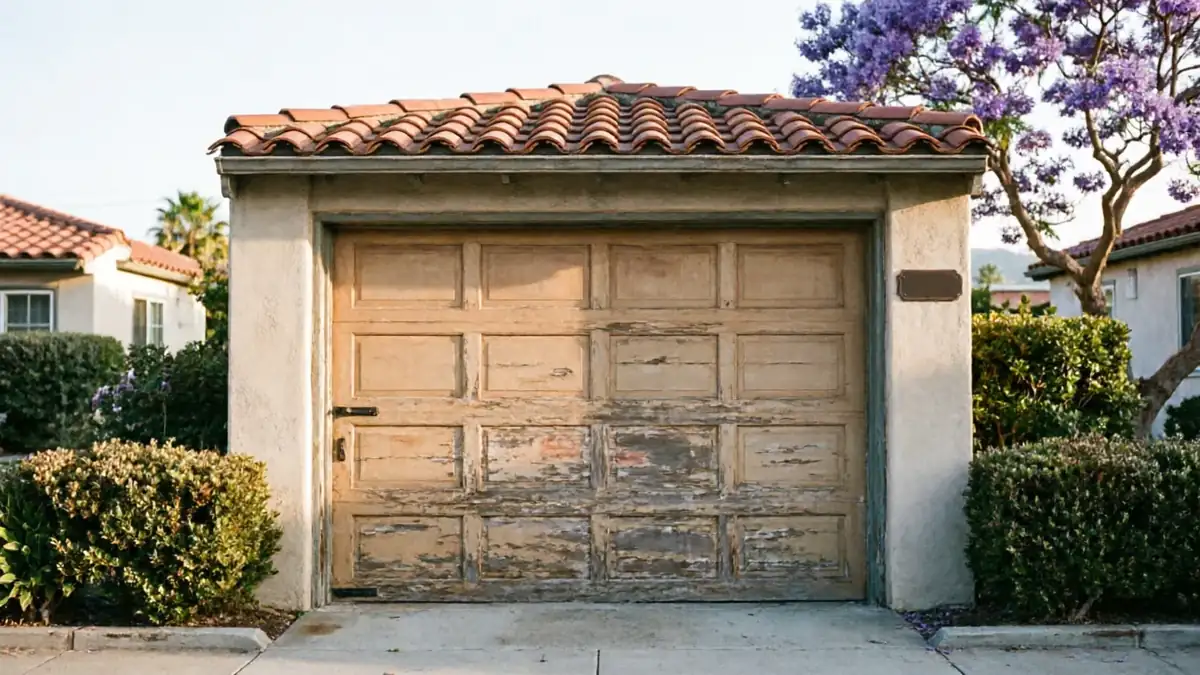
If the door still opens and closes without grinding, shaking, or hanging crooked, you don't need to do anything today. A lot of the housing stock across this stretch of the coast went up between 1967 and 1997, with most of it clustered around 1979, so plenty of garages here are still running the original door and opener from that build era. Original doesn't mean broken. Steel sections from that period were made heavier than what gets installed now, and if the track and rollers have been kept lubricated, they can run for decades past when a cheaper modern door would have failed. Waiting is a real option when the only issue is cosmetic - faded paint, a dented bottom panel, a squeak that comes and goes. What changes the math is anything touching the springs, the cables, or the opener's safety reversal. Those are the parts that don't give you a warning before they let go, and on a door this old, the lead time on a matching replacement panel can run long if you ever need just one section instead of the whole door. So the honest answer is: nothing wrong, nothing to do. Noise and stiffness are a different conversation.
What Local Conditions Do
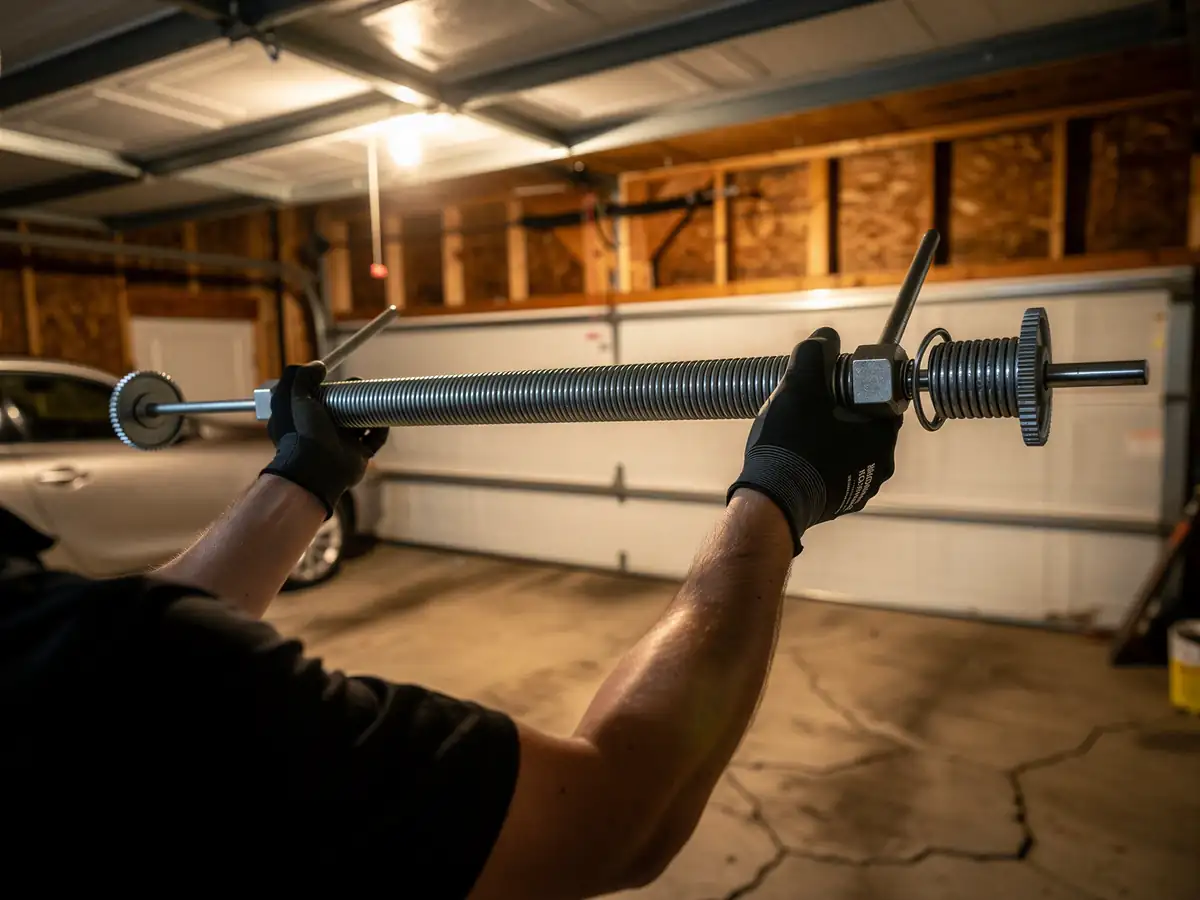
Malibu sits in a mild temperate band, which is good news for a door's mechanics - no hard freeze-thaw cycling to work springs loose, no deep winter cold to stiffen grease solid. But mild doesn't mean dry. Coastal salt air works slowly on unprotected steel hardware - hinges, end bearing plates, the torsion spring itself - especially on doors within a mile or two of the water. A door in six miles inland, ages differently than one in facing the coast directly. If your hardware looks pitted or has a chalky white buildup rather than clean rust, that's salt doing its work, not just age. On a door built in the 1970s or 80s, that corrosion is usually further along on the fasteners and spring coils than the panels themselves, since the panels are painted steel and the small hardware often isn't. None of this means replace the whole unit. It means the galvanized coating and the paint matter more here than they would somewhere drier and further from the coast, and it's worth checking the hardware, not just listening to the motor.
The Situation
Most of the garage doors we're called out to across this service area - spanning nine named neighborhoods from out toward Topanga - are original to houses built in that 1967-1997 window, median right around 1979. That means a lot of single torsion spring setups, steel rollers instead of nylon, and openers that predate modern safety-reversal standards. A door like that is worth fixing, not replacing, if the track is straight, the panels aren't rusted through, and the springs are original but intact. It's not worth fixing once a cable has frayed to the point of showing wire strands, or the bottom panel has rusted open from years of salt exposure rather than just surface pitting. Age by itself isn't the deciding factor - condition is. A 45-year-old door with clean hardware and a straight track can outlast a 10-year-old door that's been neglected. What we can't tell you without seeing it is exactly how far corrosion has gotten into a spring coil or a hinge pin, because that varies house to house even on the same street.
When to Get Help
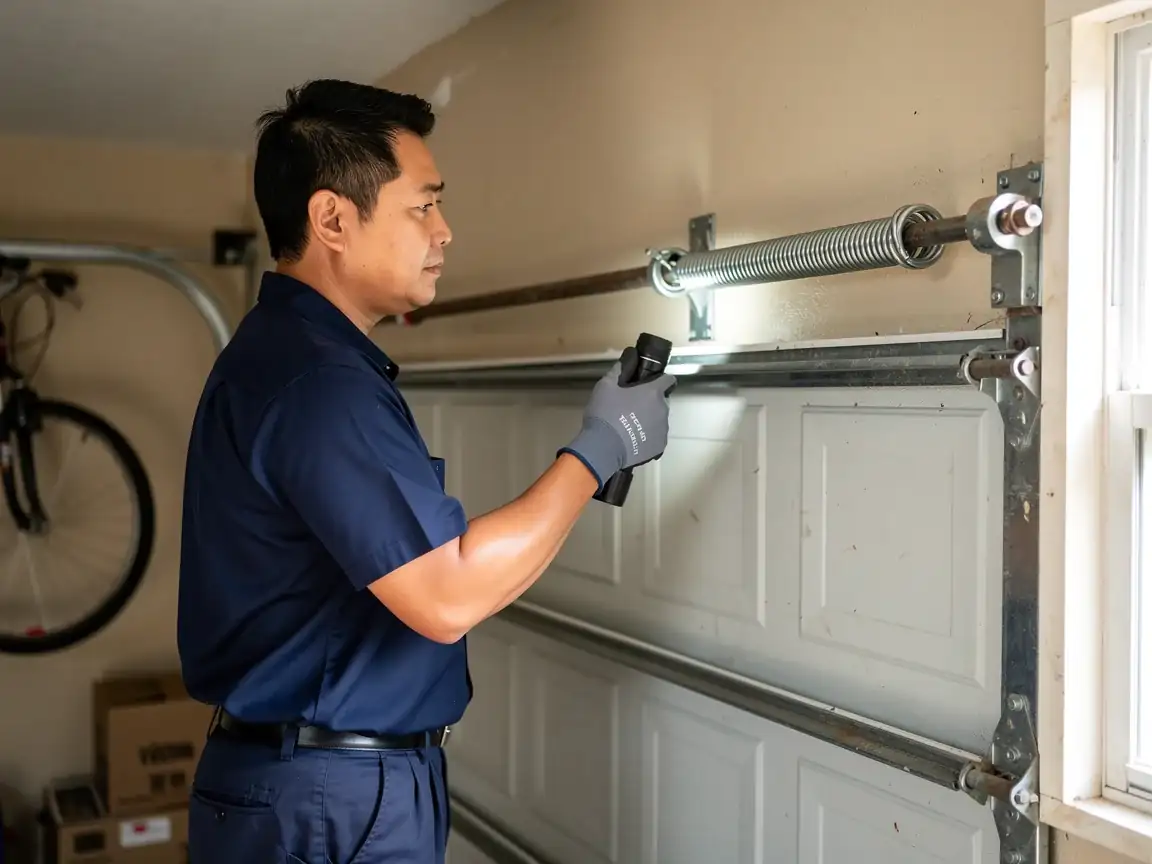
Call before the door fails completely, not after. A spring that's visibly stretched, a cable that's starting to fray, or an opener that reverses unpredictably are all signs the door is close to failing in a way that could hurt someone or wreck the track on the way down. If you've got one of the original doors from the 1967-1997 build era and you're not sure whether it's salt-worn hardware or just dust, that's worth a look too - it's a five-minute check and it tells you whether you're looking at a repair or a full replacement. One limitation worth saying plainly: if a panel is rusted through or a spring size is no longer made to match your original door, we're not going to pretend a patch job will hold. At that point replacement is the honest recommendation, even though it costs more than a repair call.
How it works
From “it’s stuck” to “it’s fixed”
1
Tell us what’s wrong
Describe the symptom - won’t open, loud bang, opener runs but the door won’t move.
2
On-site diagnosis
A technician tests the door under power and by hand and finds what actually failed.
3
Clear, up-front plan
You get the fix that’s needed and what drives the cost - before any work starts.
4
Repaired & tested
The repair is done, the door is set true and tested, and the work area left clean.
Not sure which repair your door needs in Malibu, CA? Describe what it’s doing - every job starts with a diagnosis.
Straight answers about garage door repair in Malibu. Still unsure? Ask us directly.
Is it worth fixing a garage door from the 1970s?
Usually yes, if the track is straight and the panels aren't rusted through. Doors from that era were built with heavier steel than a lot of what's sold today. What usually needs attention isn't the door itself but the springs, cables, and hardware, which show age and salt wear faster than the panels do.
Why does my garage door hardware corrode faster in Malibu than other places?
Coastal salt air works on unprotected steel hinges, bearing plates, and spring coils even though the climate here is mild. Houses closer to the coast in see this faster than ones further inland toward. It shows up as pitting or a chalky white film rather than ordinary rust.
How do I know if my old door needs replacing instead of repair?
If a cable shows frayed wire strands, a panel has rusted through rather than just pitted on the surface, or the spring size is no longer made for your door, repair won't hold. Those are replacement situations. A straight track and intact hardware, even on an original 1970s or 80s door, usually means repair is enough.