Broken torsion or extension spring on your Malibu garage door? See why this fault is common in homes built 1967-1997 and what actually fixes it, not masks it.
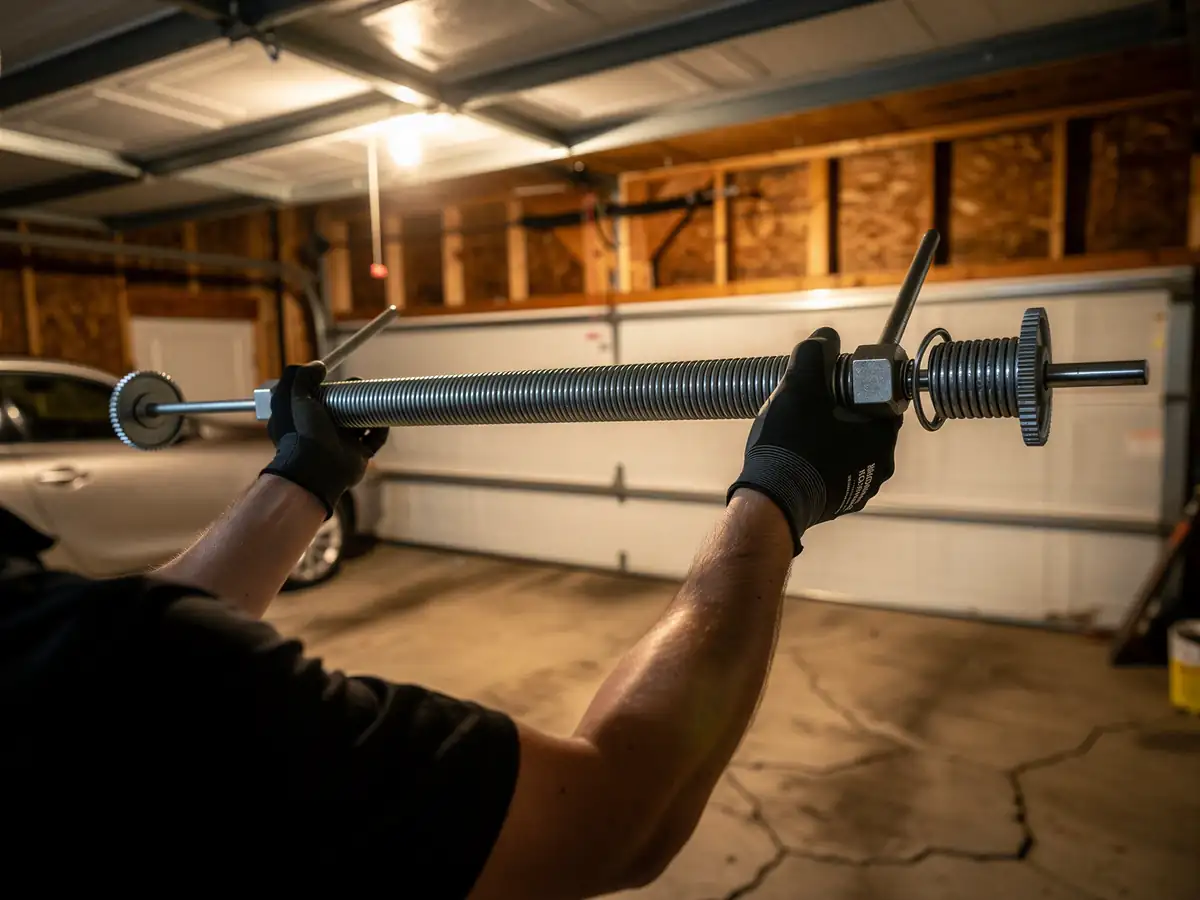
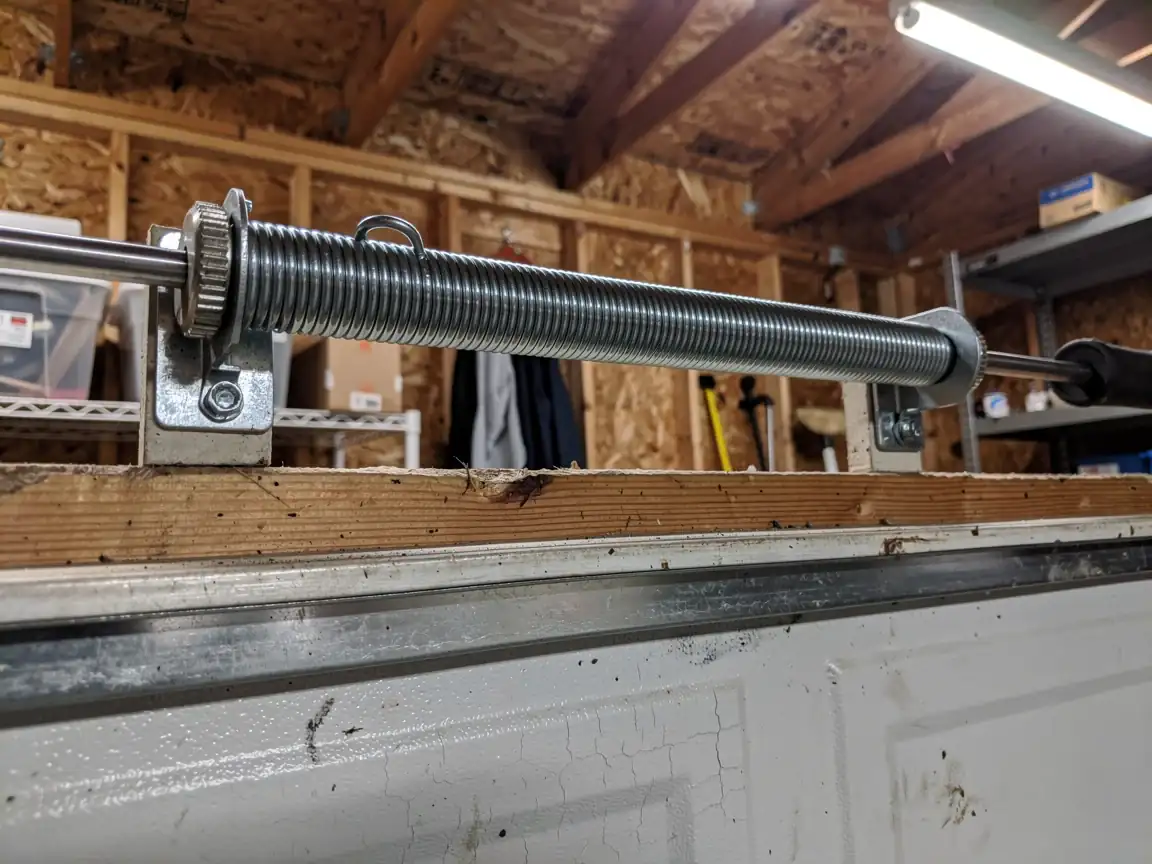
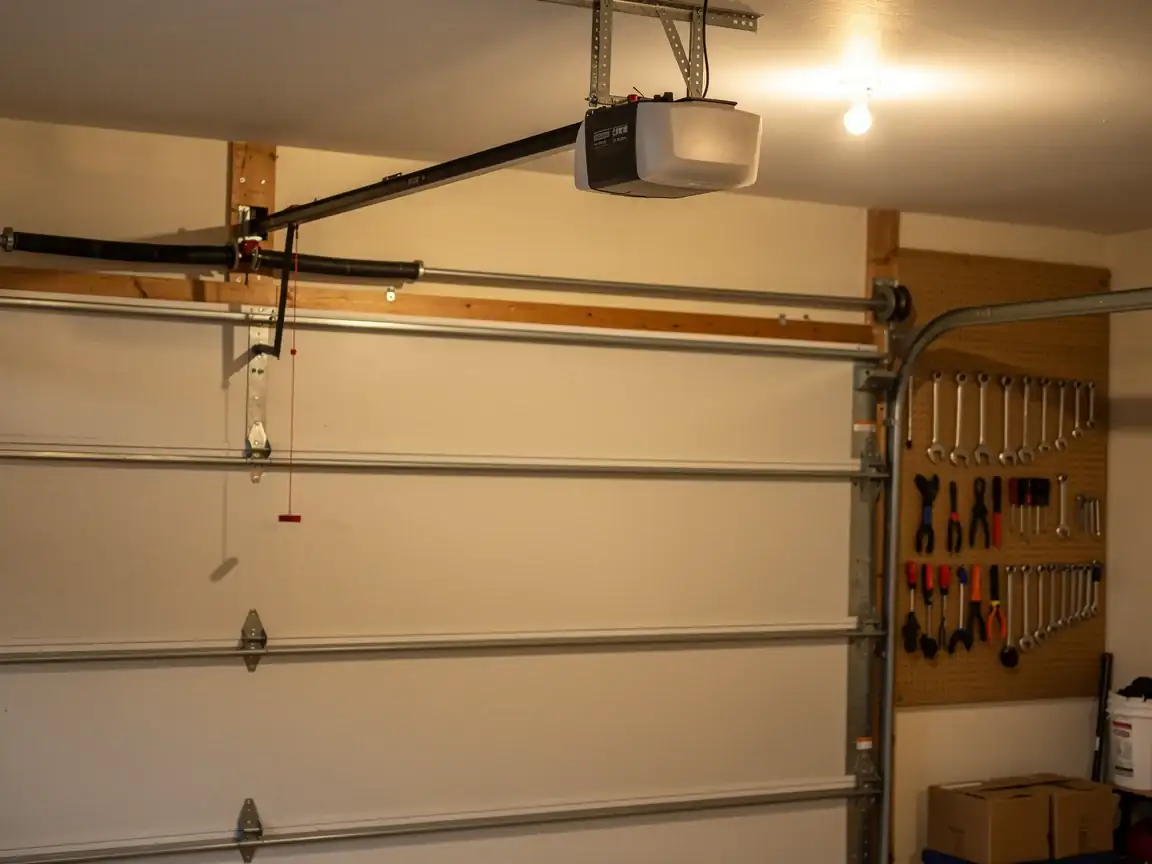
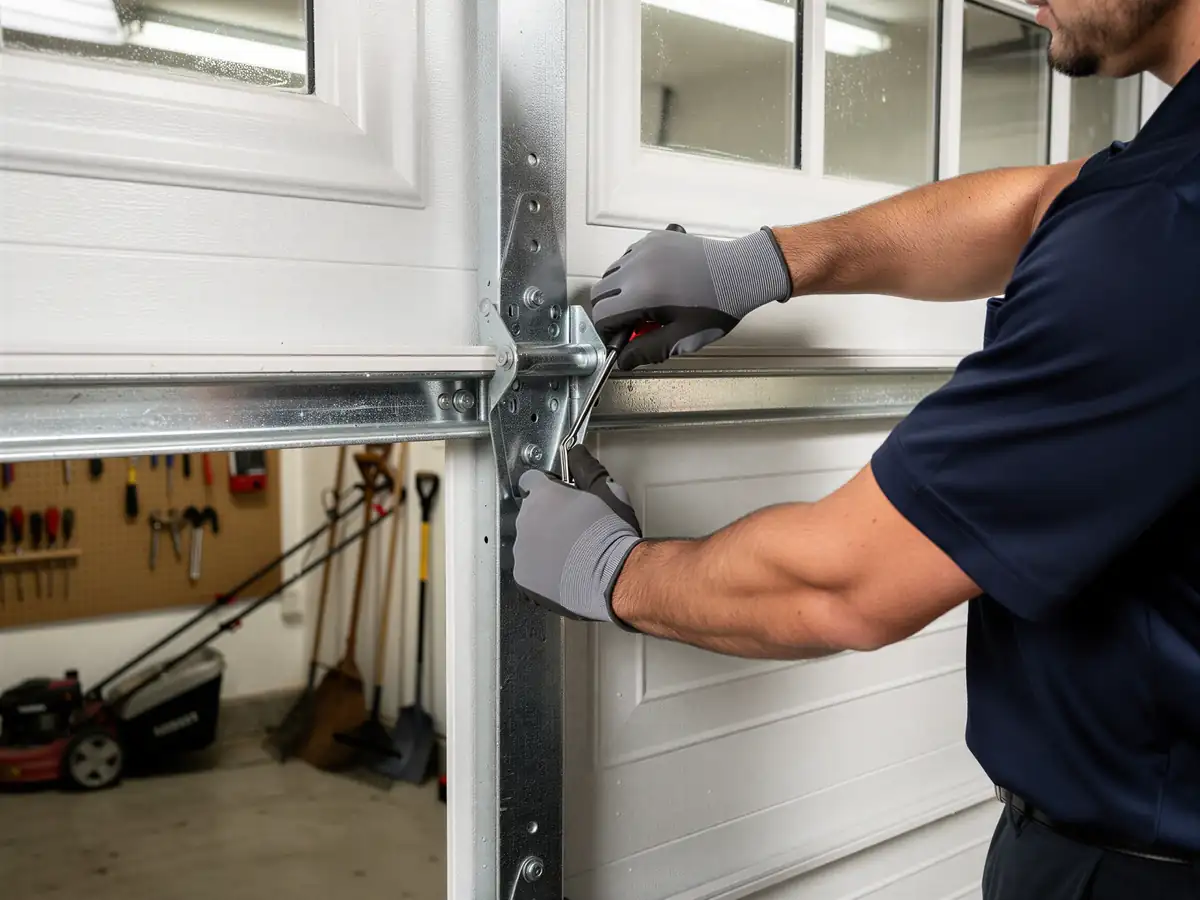
Wound tight enough to lift 150 to 400 pounds of panel. An extension spring, mounted along the horizontal track, stores the same kind of force in a straight stretch instead of a coil. Either one can take a hand off if it lets go while you're near it, which is why winding bars and a locking vise grip aren't optional gear - they're the whole safety system.
02
We'll say the honest thing: this is not a project for a Saturday afternoon with a socket set
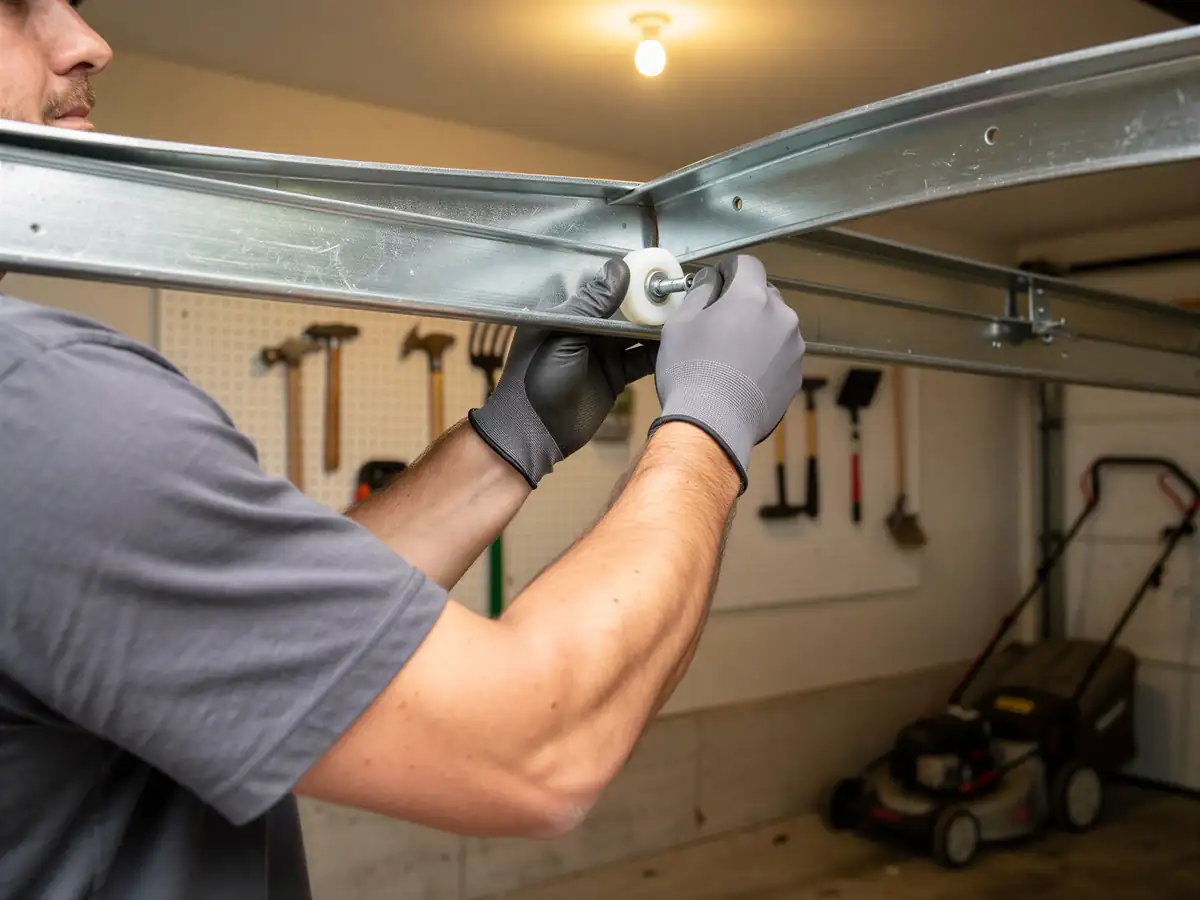
Unwinding a wound torsion spring without the right bars, or guessing at the wind count on a replacement, is how people end up in an ER with a fractured wrist or worse. If you're comfortable swapping rollers, tightening hinge bolts, or lubricating a track, do that. Leave the spring itself to someone who does it daily.
03
What you can do yourself: check whether the door is still balanced before anything breaks
Disconnect the opener, lift the door by hand to waist height, and let go. A door in good spring tension stays put. One that drops or shoots up means the springs are already losing tension, and you've caught it before a cable snaps or the opener motor burns out trying to compensate.
What Can Go Wrong
Torsion springs fail two ways: the coil fatigues and snaps clean through, usually with a loud bang, or the winding cone cracks and the spring unwinds slowly, dropping the door's lift capacity over weeks. Extension springs fail by stretching past their rated elongation until a coil separates, or the safety cable (if one's installed) is what keeps the spring from becoming a projectile across the garage.
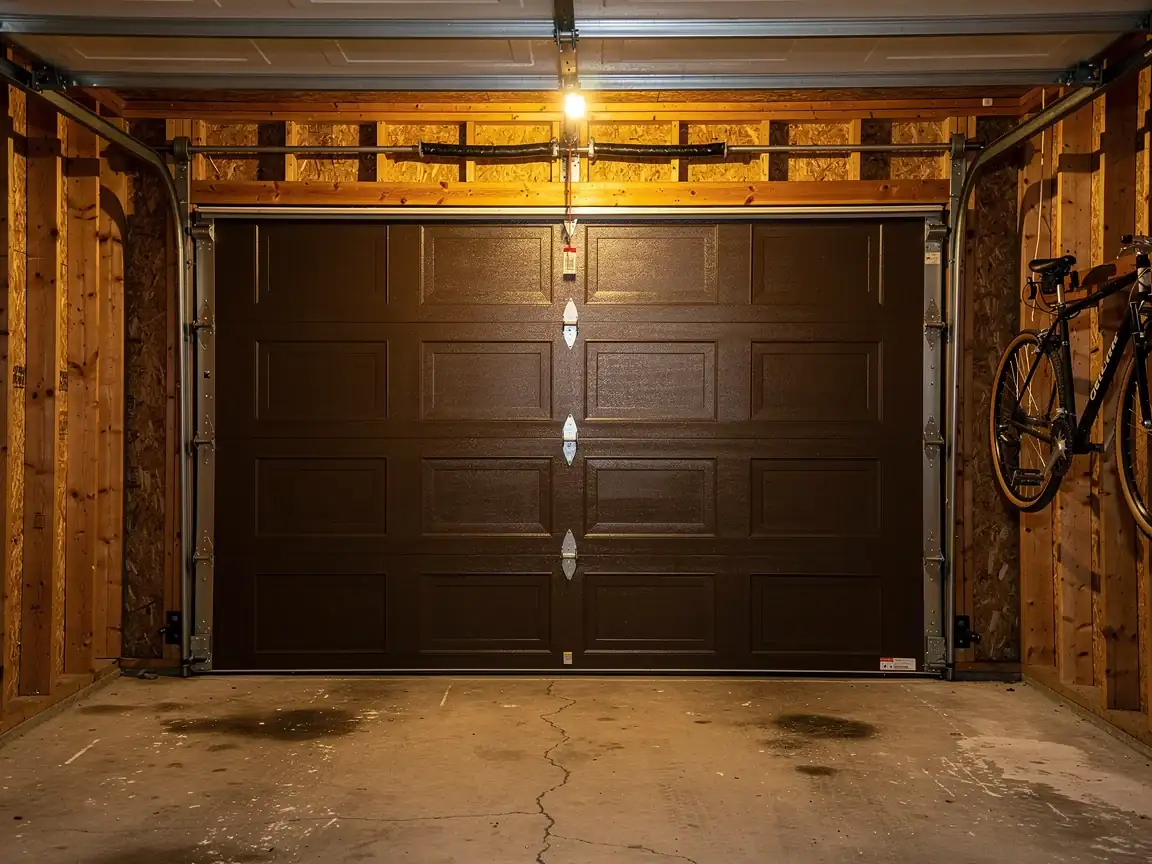
A spring rarely fails alone. On older torsion setups, a snapped spring often takes the cable drum or the stationary cone with it, and a worn cable that's been carrying uneven load can fray or snap at the same time. On double doors, it's common for one spring to go first and the second to follow within weeks, because the remaining spring is now doing double duty.
The failure we see most and fix least cheaply is a broken spring on a door that was never rebalanced after a previous repair - the opener has been fighting the imbalance for months, and by the time the spring finally gives out, the drum, bearings, and sometimes the opener gears have already taken damage alongside it.
How It Shows Up
The classic sign is a loud bang from the garage, often mistaken for something falling or a car backfiring outside - that's a torsion spring letting go under full tension. After that, the door either won't budge when the opener tries to lift it, or it lifts a few inches and stalls while the motor strains and clicks.
Slower failures look different. The door gets noticeably heavier to lift by hand over a period of weeks. The opener starts reversing partway through a close cycle because its force sensor reads the door as too heavy. You might notice the door hanging unevenly, one side higher than the other, which usually means one spring on a double-spring setup has already lost tension while the other is still holding.
A door that slams down hard on its own, rather than lowering at a controlled pace, is a spring that's lost most of its lift and is now letting gravity do the work. That's not a lubrication problem and it doesn't resolve on its own - it gets worse with every open-close cycle until something else in the system gives way too.
Why It Happens Here
01
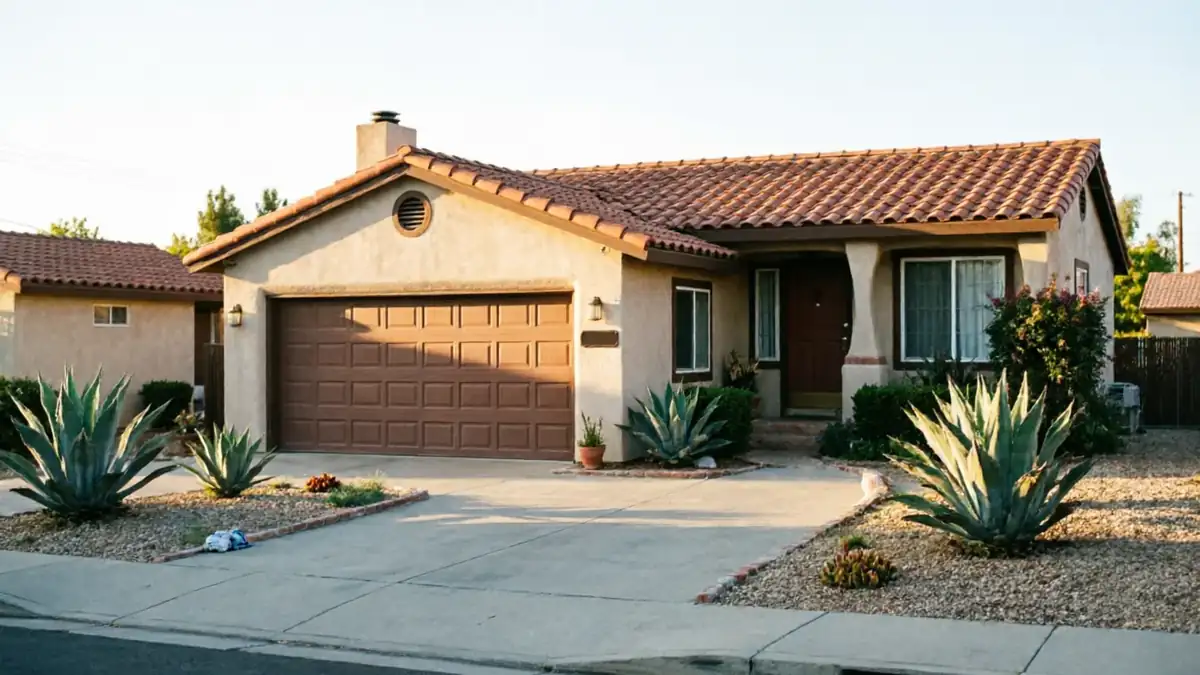
Most of the housing across this part of the hills and coastline went up between 1967 and 1997
With the typical build year landing around 1979, and a lot of those garages still have their original torsion hardware. A spring rated for roughly 10,000 cycles doesn't care what decade it is - at one or two uses a day, a spring installed in 1979 has been well past its rated life for years, and fatigue failure at this point is normal wear, not bad luck.
02
Nine named communities across this service area share that same 1960s-70s build pattern
From Westlake Village and Oak Park out to Hidden Hills and Bell Canyon, which means the same original-equipment torsion springs are reaching end of life on a similar timeline across all of them. The mild, temperate climate band that covers this coastline doesn't add the deep freeze-thaw cycling that stresses steel in colder regions, so when a spring here fails, it's almost always plain fatigue from cycle count, not rust or cold-weather brittleness.
03
Across the roughly 9,734 owner-occupied houses in this service area
The two-car double door on a pair of torsion springs is still the setup we run into most. With median household income near $174,069 here, most owners choose to replace both springs and upgrade the cable and drum hardware together rather than patch one side and wait for the other to go.
9,734 owner-occupied
$174,069 median household income
How it works
From “it’s stuck” to “it’s fixed”
1
Tell us what’s wrong
Describe the symptom - won’t open, loud bang, opener runs but the door won’t move.
2
On-site diagnosis
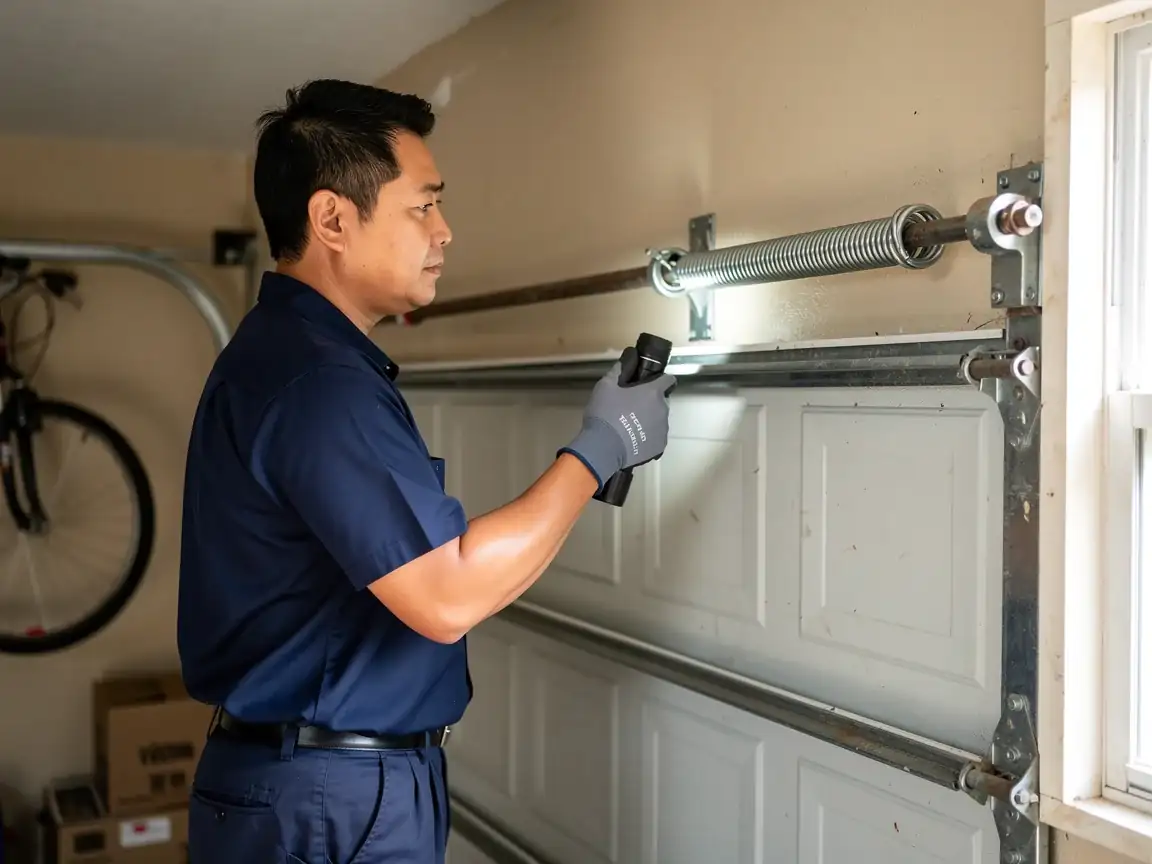
A technician tests the door under power and by hand and finds what actually failed.
3
Clear, up-front plan
You get the fix that’s needed and what drives the cost - before any work starts.
4
Repaired & tested
The repair is done, the door is set true and tested, and the work area left clean.
Not sure which repair your door needs in Malibu, CA? Describe what it’s doing - every job starts with a diagnosis.
Straight answers about garage door repair in Malibu. Still unsure? Ask us directly.
How long does a garage door spring last before it needs replacing?
Torsion springs are rated by cycle count, usually around 10,000 cycles, which for average daily use works out to roughly 7-12 years. Homes here with original hardware from the 1970s and 80s are typically well past that number, so age alone is often reason enough to replace rather than wait for a snap.
Can I just replace one spring on a double garage door?
You can, but it's not what we recommend. If one spring failed from age, the other is usually close behind, and running a new spring against an old one puts uneven load on the shaft and bearings. Most owners replace both together to avoid a second service call within the year.
Why did my garage door spring break with no warning?
Spring steel fatigues gradually under repeated winding and unwinding, then fails suddenly once it crosses its limit - there's rarely a slow warning sign for a torsion spring the way there might be a squeak from a dry hinge. A loud bang from the garage is almost always the spring itself letting go.
Is it safe to open my garage door by hand after a spring breaks?
A door with a broken spring can weigh well over 100 pounds more than it did with tension intact. Don't try to force it open by hand or with the opener - you risk the remaining hardware or a cable giving way. Leave the door closed and call for the repair.